Showing posts with label jhumpa lahiri. Show all posts

Monday, October 18, 2010

The Unaccustomed Earth


Jhumpa Lahiri rocks once again with her new short story collection-The Unaccustomed Earth. It is only an instinct for a reader, who has captivated by the life sketched in The Interpreter Of Maladies, to get a copy of this short story collection. As the reader leaf through the pages of The Unaccustomed Earth, life opens with all its colours and smells.

The collection itself can be seen as a garden in which different flowers with unique aromas and colours contribute to the panorama. Adapting the theme of the book from Nathaniel Hawthorne’s The Custom House, the stories convey the idea that expatriate life can be a rewarding one, only when women strike their roots to the ‘unaccustomed earth.’ Jhumpa Lahiri gives testimony for this idea through the sketch of two generations of Bengali immigrants in America.

Family relationships in an expatriate soil have a different significance than that in India. The stories “Hell-Heaven,” “Only Goodness,” and “Unaccustomed Earth” deal with the tensions in Indian immigrant families. “A Choice Of accommodations” and “Nobody’s Business” depict the strains of Indo-Anglo co-habitation.


The short story trio-“Hema and Kaushik” –is an introduction to a new writing style of Jhumpa Lahiri. The story moved me as deeply as it sketched through the protagonists' minds. Hema and Kaushik’s childhood, their unacknowledged teenage infatuation for each other, the expatriate Bengali lineage that they share, their middle age romance and the disaster that they encounter will etch in the memory even time after the story gets finished. The stories are aptly named as “Once In A Lifetime” to mark the time the teenage protagonists shared under one roof, “Year’s End” to mark the found and lost relationship that Kaushik shared with his step sisters and “Going Ashore” to mark the reunion of Hema and Kaushik and proceeding events.

The movements of events in these stories are spontaneous. As someone criticized, the stories have no marked beginning and finished end. The stories can begin anywhere from your imagination and can continue in your imagination. That is the ability that a good reader imparts to you-the power of imagination where you can ponder over small events and see the wonderful story in it.

Publishers: Random House
Price: Rs.595/-

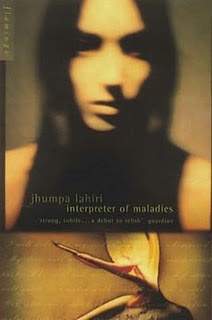
Interpreter Of Maladies: Stories


Jhumpa Lahiri's Interpreter Of Maladies: Stories can be considered as a piece of diasporic writing. This short story collection includes the stories about the lives of immigrant Indians who struggle to adjust between the Indian traditions that they left behind and the entirely different western world that they have to encounter every day. Being born as the daughter of Bengali parents in London; homeland for the author is only an imaginary place. Interpreter Of Maladies: Stories is her first published short story collection and had won Pulitzer Prize for fiction in the year 2000.

The stories " A Temporary Matter", " When Mr.Pirzada Came To Dine", " Mrs. Sen's", "The Blessed House", "Sexy" and " The Third And Final Continent" deal with the sense of alienation that an emigrant Indian feels in a foreign country.


In " A Temporary Matter" a young couple exchange confessions after a long silence to cope with the failure in their marriage. " When Mr.Pirzada Came To Dine," narrates the cultural unanimity between an Indian family and Pakistani young man in a foreign country. "The Blessed House" is the story that shows the adjustment of young emigrant Indians to a new culture and beliefs.

Mrs. Sen's" explores the life of an emigrant Indian life through the European point of view. " The Third And Final Continent" shows the hegemonic control still exercised by the European people over the third world people. "Sexy" is the story that shows the falling marital relationship among young emigrant Indians. The story shows the extra marital relationship between an Indian and a western woman as well as her feelings to valuable relationships.

The title story " Interpreter of maladies" stands exceptional among all other stories. The story powerfully narrates the fascination of the third world people to the European life. The protagonist Mr.kapasi is an interpreter and " English is the only non-Indian language he spoke fluently..." (P.52). The story shows how the everyday language of a common Indian becomes a western language. " Interpreter of maladies" is an open confession of immigrant Indians, who have to shut their dilemmas and nostalgic feelings at a foreign culture.

Interpreter Of Maladies: Stories falls under the category of post-colonial Indian English fiction. The stories deal with the nostalgia for homeland that emerges chaotic and even harsh at some times. The narrative is simple and poetic. The use of symbols and images has been merged with the theme of the stories. The stories will grasp the whole attention of the reader till the end and will leave thoughtful impressions in their minds. This short story collection will be a valuable addition to your library and you can go back to explore the contemporary Indian culture.

Reference
Lahiri, Jhumpa. Interpreter Of Maladies: Stories. New Delhi, Harper Collins Publishers Pvt ltd, 1999.

Friday, August 20, 2010

Review of Interpreter Of Maladies: Stories


Jhumpa Lahiri's Interpreter Of Maladies: Stories can be considered as a piece of diasporic writing. This short story collection includes the stories about the lives of immigrant Indians who struggle to adjust between the Indian traditions that they left behind and the entirely different western world that they have to encounter every day. Being born as the daughter of Bengali parents in London; homeland for the author is only an imaginary place. Interpreter Of Maladies: Stories is her first published short story collection and had won Pulitzer Prize for fiction in the year 2000.

The stories " A Temporary Matter", " When Mr.Pirzada Came To Dine", " Mrs. Sen's", "The Blessed House", "Sexy" and " The Third And Final Continent" deal with the sense of alienation that an emigrant Indian feels in a foreign country.

In " A Temporary Matter" a young couple exchange confessions after a long silence to cope with the failure in their marriage. " When Mr.Pirzada Came To Dine," narrates the cultural unanimity between an Indian family and Pakistani young man in a foreign country. "The Blessed House" is the story that shows the adjustment of young emigrant Indians to a new culture and beliefs.


Mrs. Sen's" explores the life of an emigrant Indian life through the European point of view. " The Third And Final Continent" shows the hegemonic control still exercised by the European people over the third world people. "Sexy" is the story that shows the falling marital relationship among young emigrant Indians. The story shows the extra marital relationship between an Indian and a western woman as well as her feelings to valuable relationships.

The title story " Interpreter of maladies" stands exceptional among all other stories. The story powerfully narrates the fascination of the third world people to the European life. The protagonist Mr.kapasi is an interpreter and " English is the only non-Indian language he spoke fluently..." (P.52). The story shows how the everyday language of a common Indian becomes a western language. " Interpreter of maladies" is an open confession of immigrant Indians, who have to shut their dilemmas and nostalgic feelings at a foreign culture.

Interpreter Of Maladies: Stories falls under the category of post-colonial Indian English fiction. The stories deal with the nostalgia for homeland that emerges chaotic and even harsh at some times. The narrative is simple and poetic. The use of symbols and images has been merged with the theme of the stories. The stories will grasp the whole attention of the reader till the end and will leave thoughtful impressions in their minds. This short story collection will be a valuable addition to your library and you can go back to explore the contemporary Indian culture.

Reference
Lahiri, Jhumpa. Interpreter Of Maladies: Stories. New Delhi, Harper Collins Publishers Pvt ltd, 1999.