Friday, August 26, 2011

Orikkal by N Mohanan


Who hasn’t loved and lost even once in life? The love might not have been explicit, double sided or even recognized. But, that love must have played at least a small role in our lives. Malayalam writer, N. Mohanan’s semi autobiographical novel Orikkal is about such a love that had shaped a persona in him.

Who was the owner of the author’s lost love? There is no name given in the novel respecting the identity of the beholder. She has been constantly addressed as ‘the girl.’

Before getting into the details of the novel, let me remember an article written by Tanuja S Bhattathiri about her late uncle. In that she had written about her uncle’s lost love. The lost love always remained in his mind with the tokens of love letters, hand kerchiefs and other reminiscent of the romantic period. I was surprised to learn that N. Mohanan’s wife had safely kept these love tokens for him and his romance was not a secret in the household. 

Tanuja had written, “When my brother had undergone a troublesome period after his love failure, ammaman consoled him citing his own experience.” I really admired N.Mohanan’s wife for that loving courage, without whose loving understanding, he wouldn’t have sustained his love traumas long enough to give advice to the next generation. However, after reading his autobiography I have admitted one more thing. He was the owner of a loving mind, who could also radiate the fragrance of love to those around him.

Mohanan wrote about ‘the girl’ in his life with much fondness. Their platonic love in the 1960s' Kerala society was coloured by literary discussions, first lessons of the unconditional love, innocent dreams and above all, trust to each other.  The world that they had dreamt together subsequently shattered. After drinking the pain of separation, each of them walked in their own paths holding the hands of their loving partners.

Still the love sustained! It is that love that N.Mohanan talks about in the novel. The love is not romance but a mixture of concern, care and gratitude for the woman in his life who first taught him the meaning of love. In his poetic and meditating language N Mohanan transcends the reader to this world of love, which many of might not have experienced. 

I’ve to give one more last reference before completing this review. In the Malayalam movie Chandrolsavam the already married heroine Indulekha asks her returned lover Sree, “Didn’t you ever hate me for marrying another man?” Sreehari’s reply was crisp and from heart, “Never! I was upset with myself and life, but never with you! My life afterwards taught me to smile at the face of miseries and befriend with those who had gone from my life." I never believed that such a love existed! Well, N. Mohanan’s Orikkal is a testimony for it.

Tuesday, August 23, 2011

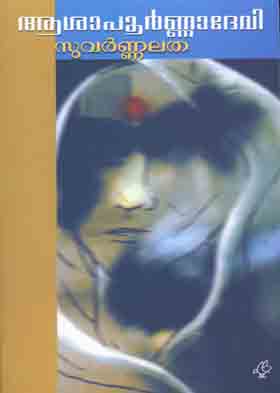
Suvarnalatha by Ashapoorna Devi


It was more than a year since my amma had started to insist me on reading Ashapoorna Devi’s novel Suvarnalatha. Though curious, many things kept me away from reading that novel.  However when I started reading that novel, I finished reading it within three days and immediately understood my mother’s interest in it. The novel was a representation of a generation that my amma and her contemporaries lived with!

Got married into a strict family at the childhood age of nine, marriage was never a sweet fruit for Suvarnalatha. Her marriage took away so many dear dreams from her life-the love and protection of her parents, rightful education, care from the dear ones and most of all the right to dream a normal life.

Most of Suvarnalatha’s life was spent in her in-law’s family, where she had no right to raise her voice. As a child bride and teenage mother, Suvarnalatha dared to dream a beautiful home with neat ambience. However as years pass by, her dreams started to get scattered and she sowed new dreams of hope for her children.

Education for her children! That was the prime aim in Suvarnalatha’s life. Despite the retaliation from own kids, Suvarnalatha forcefully implants the roots of education in her children’s lives. While the youngest girls feel for their mother’s needs, the eldest children grow sympathetic with their incompetent father.

Here, as many might see, I don’t consider Suvarna’s husband Prabodh as a loveless one. He was just ignorant-ignorant of women’s lives, their dreams, aspirations and secret desire for the ray of freedom. Though he had wished to help Suvarnalatha in fulfilling her dreams, her outbursts, maintaining the macho husband image, tantrums from his mother and finally Suvarnalatha’s silence kept him away from her world.

Just as many others of her age, Suvarnalatha didn’t know what would fulfil her life. In the younger age she tried to put her ideas through outbursts and silent suffering. As time passed her struggle grew more conscious to be away from her mother’s path, who had abandoned her father in protest against Suvarna’s child marriage.  By the time Suvarna reached middle age, she sheltered herself under the cocoon of silent protest, from where she helplessly watched her children growing apart and those who sympathized with her being helpless in their own struggles.

Suvarnalatha passes away at the age of fifty five without giving any struggles but welcoming death as her companion. Death was the only dream that had come true in her life. However, from her pyre some sparks fall out to ignite some changes in her hitherto unfulfilled life. Her friend insists on fulfilling Suvarna’s last wish of draping the dead body in saree bordered with rich dark colour. Also, her youngest daughter Bakul feels for her mother in the final moments and set out to retrace the path walked by her deceased mother.

When I finished reading the novel I sat by Amma and discussed the content. She told, “Women in our generation were certainly hungry for knowledge and felt with every social turns.  But many of us couldn’t come out. We cherished small, small dreams and most of them went unfulfilled. Now, don’t forget to read the novel Bakulinte Katha. It’s the story of your generation!”

Afterword: The Bengali writer Asapoorna Devi originally published the novel in Bengali as Subarnalatha. It got translated into Malayalam by P Madhavan Pillai and published by ‘Current Books.’

Thursday, June 30, 2011

That Long Silence by Shahsi Deshpande

When I read Shashi  Deshpande’s novel That Long Silence  in the first year of my graduation, how little had I known about its depth other than pure academical intentions. I thought of that novel on and off over the years for some purpose or other.

That Long Silence is not an imaginary story. It is a story that happens in every middle class and educated Indian woman's life. The Indian women in this era are born at a time when there is much awareness about her rights, liberty to express her ideas, freedom to enjoy finance and the chance to stand for a cause. Still… they have a tradition of silence to continue!

This silence is not visibly forced upon them but something to be knowingly followed. The conditions may be different from family to family, but as Jaya in That Long Silence, at some point women are forced to be silent in all families. 

The protagonist Jaya is an educated middle class woman who lives with her husband Mohan and their kids Rahul and Rati. She is the typical Indian middle class woman in the present century, caught in between her realizations and the restrictions. Her father brought up Jaya as an "individual", who has the rights in the society irrespective of gender. When she thus assumes her role in the society, this upbringing still looks strange in front of the family she married into. 

Immediately after her graduation Jaya gets married and steps into her role as a dutiful wife, affectionate mother, "carefully being" dutiful to her in-laws…. to Aa, Ajji, kaka and her relatives. Her husband Mohan also plays his role as a dutiful Indian husband and never looks up to consider any imperfections in the life. As time goes Jaya's dutiful behaviour to Mohan and his family becomes a routine.

Jaya ponders throughout the novel for her role clarity, her life or is she living for someone else! She searches her identity as an individual and where her emotions are getting subdued! She, a failed writer and who had been forced to change her name as "Suhasini" in marriage, get haunted by memories of the past. 

In the meantime, Mohan leaves home due to his failure in career and to avoid the situation of "two bullocks yoked together." By the end of the novel Jaya gets back to her destined role, being present to the happiness of the family and ready to subdue her emotions.

 That’s what finally happens, right? Conciliation with your destined role!! Many of the readers can identify with one or other situation of Jaya’s story in your own life. You may find happiness or peace there but the silence will continue to echo!

Tuesday, June 21, 2011

The Golden Sepia Leaves


Amandeep Sandhu's debut novel The Sepia Leaves is indeed a promise to Indian English literature. The young Appu’s life, his emotions, feelings and concerns immediately take the reader to a new world, where they can stand beside Appu and watch his life.

The novel opens with Appu’s Baba's (father's) death, which triggers in Appu’s mind the scenes of his childhood.

At the initial stage of his childhood, Appu senses that there is something that distinguishes his family from others. In the growing up years, he realizes that his mother's unaccepted mental illness is responsible for that. The time when Appu asks his father to leave his mother is a significant scene in this novel. His father replies that his marriage with Appu's mother is a destined one and he cannot move away from responsibilities.

Baba was the real hero in his life who taught Appu the lessons of responsibility, courage and ethics in life. Appu shared Baba's love for literature and thirst for writing. A part of young Appu always longed to become the valorous Baba before his marriage with Mamman (Mother).

Always despised by her husband's family and the public, cared by her husband and loved/feared by her own son, Mamman's life is always under the shadows created by her own. She takes pride in being highly educated and coming from an affluent family. At the same time, she blames her husband and family for wasting away her wealth and education. An unfortunate incident had turned this poor woman into the circumstances that she was put in. Appu learns her story at a later stage and his heart goes on for her.

There are other prominent characters that leave their strong impressions on Appu’s eventful life. Baba takes Mando home to take care of Appu as well as to save her from the disastrous condition that she had been put in. Mando adjusts with the screeches and curses put on her by Mamman. Even in the troubled ambience of Appu's family, Mando finds peace. However a bad luck awaited her too, since she becomes victim to a brutal attack when Appu and family are out of home. Later she finds her peace at home in Antaryamin's small hut.

Even after all the troublesome experience in childhood, Appu never feels that he is someone to be sympathized on. He is ready to help others and ready to ask help from others too. As the reader goes through Baba's words to Appu a new light dawns before them.

"...the world is still a good place. There are problems. We all have problems. Still, you will never be lonely." (p.179)

This is the positive energy that the reader attains as he/she turns down the last pages of Sepia Leaves. As the title of the novel suggests reading this novel will make you as nostalgic as turning the sepia leaves of your childhood album. The only difference is that this novel will rekindle your memories and make them evergreen in your life...

Sunday, June 12, 2011

Yayati By V.S Khandekar

I strongly believe that there is a time for each act in our life and the same act can have different significance in different situations.  Similarly, reading a book in different periods of your life can be totally different experience too. A re-reading of V.S. Khandetkar’s Yayati was such an experience for me. I was surprised on how much I had omitted during the first reading of this book in my childhood days.

As Yayati feels the difference in his perspectives during the four stages-Childhood, teenage, youth and old age- every human being must be feeling a difference in perspectives during these four stages in their lives too. That may be the reason; I got attracted to the dilemmas of characters in their young age during this second reading.

There is no doubt on the genius of the author to pen out the inner dilemmas of human life in an appealing manner. What we neglect about our ‘self’ in the day today life stand in bright colours in this piece of literary work. We not only think about the philosophical thoughts that hare vivid in the work but also consider our own inner dilemmas that we neglect in fear of facing them.

Human life itself is a change or growth in different levels. When we begin from our childhood, we are acutely aware of our existence within nature, which might wear off in our adolescence or youth and which might come back with a bang in our old age. When we think of this unbreakable relation with nature and not able to go with its order, there might be a tendency to wander off the path. 

Characters like Yayati, Devayani, Sage Sukracharya, and King Nahusha tried to find a way of their own through earthly pleasures. Whereas people like Yati tried to get away from the bond through extreme abandonment of worldly aspects. In a way, we, normal human beings like Sharmishta also tend to follow either of these paths when we cannot get hold on our own lives.  Curiously, it is only through a strong bond between worldly duties and our inner self that we can arrive at the final salvation.

In his long letter to Yayati, Kachan explains the intense relationship between one’s Atman (soul) and body (p.226-229). People may neglect the relationship sometimes and may realize the relationship in another turn of life. The excerpts from Upanishads and Vedas, on this relationship have been put in the novel in simple and coherent way for the reader’s thoughts.

I am not going in detail on the story line of the novel in this review. The re adaptation of the original story of  Yayati from Mahabharatha, has been made interesting with writer’s imagination and profound thoughts. In this novel, even the minor character has their own significance as Alaka (depiction of re birth and pure love), Madhavan (true friendship), Vrishaparvavu (a considerate ruler), Mandaran (depiction of fake sages) etc.

The novel progress as Yayati tells his life story from childhood to old age for the sake of humanity, so as to keep them away from his mistakes. The story is substituted also through the thoughts of his wives Devayani and Sharmishta. I felt that the technique is also an attempt to show that how two people’s perceptions on the same event can be different from one another.

Over all, you won’t be the same person who had started reading the book, after turning the last page. I missed this novel in my adolescence but keeps in my mind that I’ll take this book for re reading in my old age.

More about the book:

V.S. Khandekar had originally written Yayati in Marathi in . The book has won so many accolades, the major among them are Gyanpeeth Award (1974),  Sahitya Academy Award (1960 ) and Maharashtra State Award (1960). I read the Malayalam translation of the work done by Prof.P. Madhavan Pillai. The English translation of the book is available online

Book: Yayati
Price: Indian Rupee symbol.svg 150
Writer: V.S. Khandekar
Translator: Prof.P. Madhavan Pillai
Publishers: D. C. Books

Tuesday, May 31, 2011

The Kite Runner


An unforgettable and shocking story that would haunt you for years-That’s what Afghanistan-American writer Khaled Hosseini's novel The Kite Runner is for me. 

"There is no act more wretched than stealing, Amir" (P.16) Amir's Baba has instructed him during his childhood days. But before Amir crossed the doorsill to teenage, he stole the friendship, trust and love. But he was not alone in enduring his life with usurping guilt feelings. Life reveals to Amir that his Baba, his very own instructor had also stolen from him the right to know an intricate truth. The truth opens a path for Amir’s redemption through a thorny path.

The novel takes place in three countries-Afghanistan, Pakistan and United States- in the aftermath of 1978 civil war. The civil war, the Soviet invasion, the rise of the Taliban opposition, the tension between Shiite and Hazara community play an intrinsic role in the novel. The political issues merge with the emotions of the characters and often secrete into the oblivion. The oppression of Hazaras by the fanatic rulers of Taliban reassembles the scenes of the suppression of Jews by the Nazis. The brutal prosecution at the open ground is an instance that freezes anyone's blood for a moment.

The Kites have a symbolic meaning in this novel. It was through a kite running competition that Amir first encountered the sinful rules of cowardice, disloyalty and treachery. That had prompted him to hide in a shelter in an attempt to forget his childhood traumas. However Amir breaks the shell of solitude and sin through a path of redemption on a final kite running. The kite running becomes a path for him to soar to the real truths of life cutting back the guilty feelings and traumas.

I read this novel two years before my life at Saudi Arabia. When I had decided to come to the holy land of Muslims, I was inwardly scared. A life at a country, which is rumored to have atrocities as mentioned in the book seemed to be a nightmare. As I got used to the life here, the nightmares vanished. Though I haven’t witnessed any atrocities, rumors still hung in the air. My shameful selfishness to turn away from danger also egg me on not to know much.

After reading the book, I also watched the film adaptation of this novel. I had a fear to watch the violence in the book in front of my eyes. In contrast to my fear, the violent scenes are shown through an undertone in the movie. Moreover the movie ends with a pleasant feeling than the book.

This novel may pull you back at many times but, as you finish the last page, you may realize that pain in life may not come in a small measure. However, if you cannot stand to read dreadful violent realities, I would ask you to turn away from this book.

Tuesday, May 24, 2011

Ancient Promises: Jayashree Mishra


Some books make a deep impression on us that we carry its memory even after years. Jayashree Mishra’s   Ancient Promises is one such book for me. I had read the book for the first time in 2002. Later I bought a copy of the same in 2005 for re-reading.  Even now, I can remember the pangs, protests and panic that the protagonist had undergone in the novel.

I was drawn to the book due to various reasons. At first, I saw the mention of this book in a write up of Priya. A.S, an upcoming star in Malayalam literature. When I had started reading the book, I could relate to the character in many points too.

As a teenager, I also had a friend like Leena, whom I had accompanied in many adventures. That was one of the initial similarities.  Also, I always possessed a similar will power to change the circumstances that oppress my life. As of now, I love my daughter as dearly as Jayashree loves hers! Final and minimal reason is that there is a similarity between our names. Many incidents that followed never matched in my life.

Janaki, the protagonist of Ancient Promises always stood as the model for woman power in modern India for me. While she respected and abide to the rules of the family and society, she also had the power to change her life, when elders had gone wrong. Similarly, the hero Arjun became an ideal model lover for me in my teenage days. Janaki’s and Arjun’s union definitely proved the success of love among couples with reason.

The plot is set in three places-Kerala, Delhi and U.K.  The description of Delhi is so enchanting that one would feel like walking on its streets. The description of the places and people in each area is very accurate owing to the biographical touch in the novel. 

There was a criticism that the author had sketched characters of Marars in a cynical way. But, many Indian women would vouch for such experiences after getting married into such families.  Also, I read somewhere that the book promotes extra marital affair. But, it is only natural for a woman with liberal mind to get away from a passive husband and nagging in-laws. Above all, during all these drama, Janaki loved, cared and protected her mentally challenged daughter.

Most of the readers of the book, whom I’ve encountered, seem to have enjoyed all through the pages. The words, phrases and emotions are crafted together in such a way to draw the reader into the heart of Janaki. When the reader cries over the agonies of Janaki; the author managed to add a little pinch of humour to her writing to make them laugh through tears. 

 The novel flowed like a poetry taking the glory from the writer’s own personal experiences. The writing is truly Indian, true to the heart and direct. The novel ends with a positive note and definitely makes you think of your own life.  Women might be ready to change the circumstances that oppress them, while men might ponder over whether they are like Suresh or Arjun!