Showing posts with label p madhavan pillai. Show all posts

Tuesday, August 23, 2011

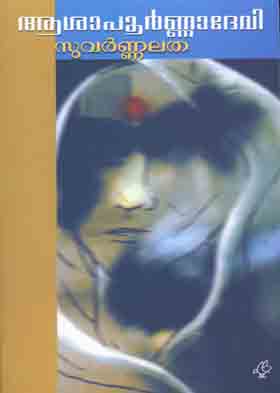
Suvarnalatha by Ashapoorna Devi


It was more than a year since my amma had started to insist me on reading Ashapoorna Devi’s novel Suvarnalatha. Though curious, many things kept me away from reading that novel.  However when I started reading that novel, I finished reading it within three days and immediately understood my mother’s interest in it. The novel was a representation of a generation that my amma and her contemporaries lived with!

Got married into a strict family at the childhood age of nine, marriage was never a sweet fruit for Suvarnalatha. Her marriage took away so many dear dreams from her life-the love and protection of her parents, rightful education, care from the dear ones and most of all the right to dream a normal life.

Most of Suvarnalatha’s life was spent in her in-law’s family, where she had no right to raise her voice. As a child bride and teenage mother, Suvarnalatha dared to dream a beautiful home with neat ambience. However as years pass by, her dreams started to get scattered and she sowed new dreams of hope for her children.

Education for her children! That was the prime aim in Suvarnalatha’s life. Despite the retaliation from own kids, Suvarnalatha forcefully implants the roots of education in her children’s lives. While the youngest girls feel for their mother’s needs, the eldest children grow sympathetic with their incompetent father.

Here, as many might see, I don’t consider Suvarna’s husband Prabodh as a loveless one. He was just ignorant-ignorant of women’s lives, their dreams, aspirations and secret desire for the ray of freedom. Though he had wished to help Suvarnalatha in fulfilling her dreams, her outbursts, maintaining the macho husband image, tantrums from his mother and finally Suvarnalatha’s silence kept him away from her world.

Just as many others of her age, Suvarnalatha didn’t know what would fulfil her life. In the younger age she tried to put her ideas through outbursts and silent suffering. As time passed her struggle grew more conscious to be away from her mother’s path, who had abandoned her father in protest against Suvarna’s child marriage.  By the time Suvarna reached middle age, she sheltered herself under the cocoon of silent protest, from where she helplessly watched her children growing apart and those who sympathized with her being helpless in their own struggles.

Suvarnalatha passes away at the age of fifty five without giving any struggles but welcoming death as her companion. Death was the only dream that had come true in her life. However, from her pyre some sparks fall out to ignite some changes in her hitherto unfulfilled life. Her friend insists on fulfilling Suvarna’s last wish of draping the dead body in saree bordered with rich dark colour. Also, her youngest daughter Bakul feels for her mother in the final moments and set out to retrace the path walked by her deceased mother.

When I finished reading the novel I sat by Amma and discussed the content. She told, “Women in our generation were certainly hungry for knowledge and felt with every social turns.  But many of us couldn’t come out. We cherished small, small dreams and most of them went unfulfilled. Now, don’t forget to read the novel Bakulinte Katha. It’s the story of your generation!”

Afterword: The Bengali writer Asapoorna Devi originally published the novel in Bengali as Subarnalatha. It got translated into Malayalam by P Madhavan Pillai and published by ‘Current Books.’

Sunday, June 12, 2011

Yayati By V.S Khandekar

I strongly believe that there is a time for each act in our life and the same act can have different significance in different situations.  Similarly, reading a book in different periods of your life can be totally different experience too. A re-reading of V.S. Khandetkar’s Yayati was such an experience for me. I was surprised on how much I had omitted during the first reading of this book in my childhood days.

As Yayati feels the difference in his perspectives during the four stages-Childhood, teenage, youth and old age- every human being must be feeling a difference in perspectives during these four stages in their lives too. That may be the reason; I got attracted to the dilemmas of characters in their young age during this second reading.

There is no doubt on the genius of the author to pen out the inner dilemmas of human life in an appealing manner. What we neglect about our ‘self’ in the day today life stand in bright colours in this piece of literary work. We not only think about the philosophical thoughts that hare vivid in the work but also consider our own inner dilemmas that we neglect in fear of facing them.

Human life itself is a change or growth in different levels. When we begin from our childhood, we are acutely aware of our existence within nature, which might wear off in our adolescence or youth and which might come back with a bang in our old age. When we think of this unbreakable relation with nature and not able to go with its order, there might be a tendency to wander off the path. 

Characters like Yayati, Devayani, Sage Sukracharya, and King Nahusha tried to find a way of their own through earthly pleasures. Whereas people like Yati tried to get away from the bond through extreme abandonment of worldly aspects. In a way, we, normal human beings like Sharmishta also tend to follow either of these paths when we cannot get hold on our own lives.  Curiously, it is only through a strong bond between worldly duties and our inner self that we can arrive at the final salvation.

In his long letter to Yayati, Kachan explains the intense relationship between one’s Atman (soul) and body (p.226-229). People may neglect the relationship sometimes and may realize the relationship in another turn of life. The excerpts from Upanishads and Vedas, on this relationship have been put in the novel in simple and coherent way for the reader’s thoughts.

I am not going in detail on the story line of the novel in this review. The re adaptation of the original story of  Yayati from Mahabharatha, has been made interesting with writer’s imagination and profound thoughts. In this novel, even the minor character has their own significance as Alaka (depiction of re birth and pure love), Madhavan (true friendship), Vrishaparvavu (a considerate ruler), Mandaran (depiction of fake sages) etc.

The novel progress as Yayati tells his life story from childhood to old age for the sake of humanity, so as to keep them away from his mistakes. The story is substituted also through the thoughts of his wives Devayani and Sharmishta. I felt that the technique is also an attempt to show that how two people’s perceptions on the same event can be different from one another.

Over all, you won’t be the same person who had started reading the book, after turning the last page. I missed this novel in my adolescence but keeps in my mind that I’ll take this book for re reading in my old age.

More about the book:

V.S. Khandekar had originally written Yayati in Marathi in . The book has won so many accolades, the major among them are Gyanpeeth Award (1974),  Sahitya Academy Award (1960 ) and Maharashtra State Award (1960). I read the Malayalam translation of the work done by Prof.P. Madhavan Pillai. The English translation of the book is available online

Book: Yayati
Price: Indian Rupee symbol.svg 150
Writer: V.S. Khandekar
Translator: Prof.P. Madhavan Pillai
Publishers: D. C. Books